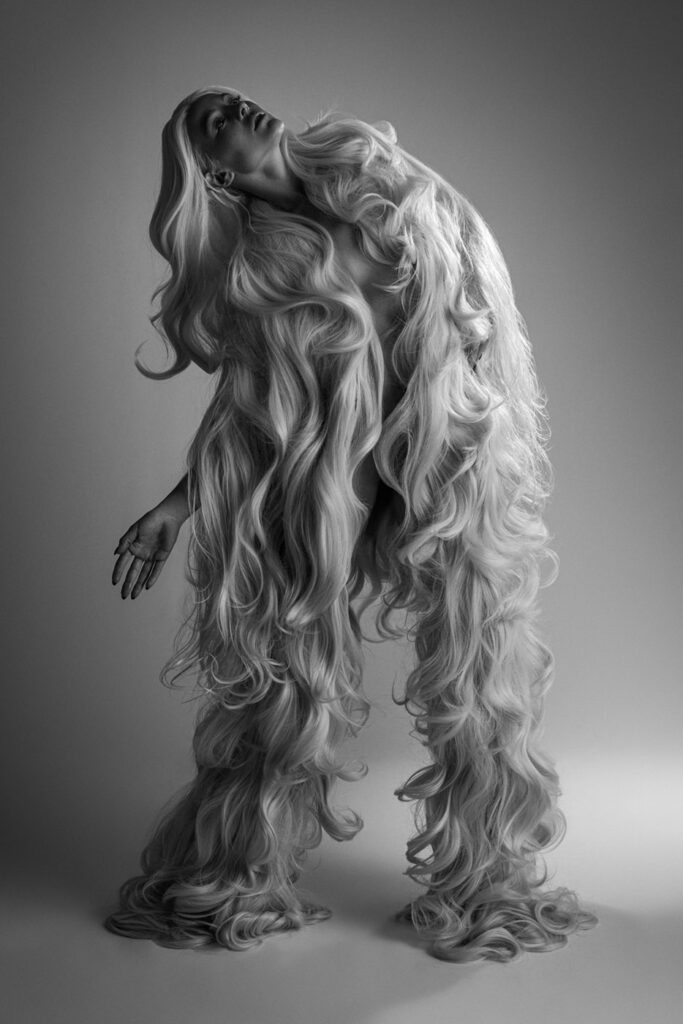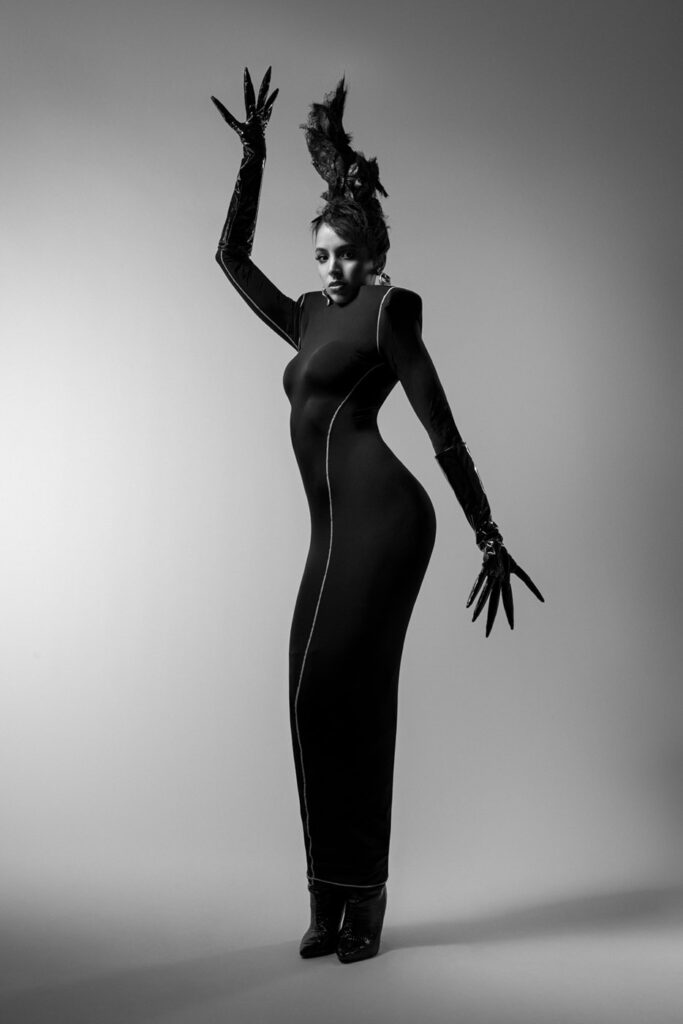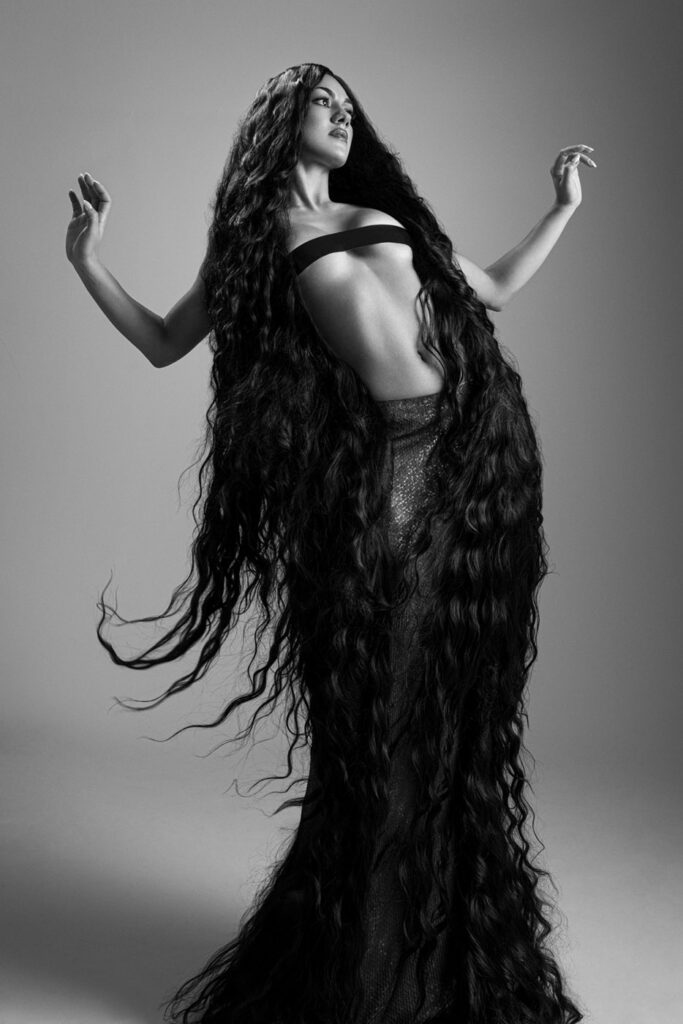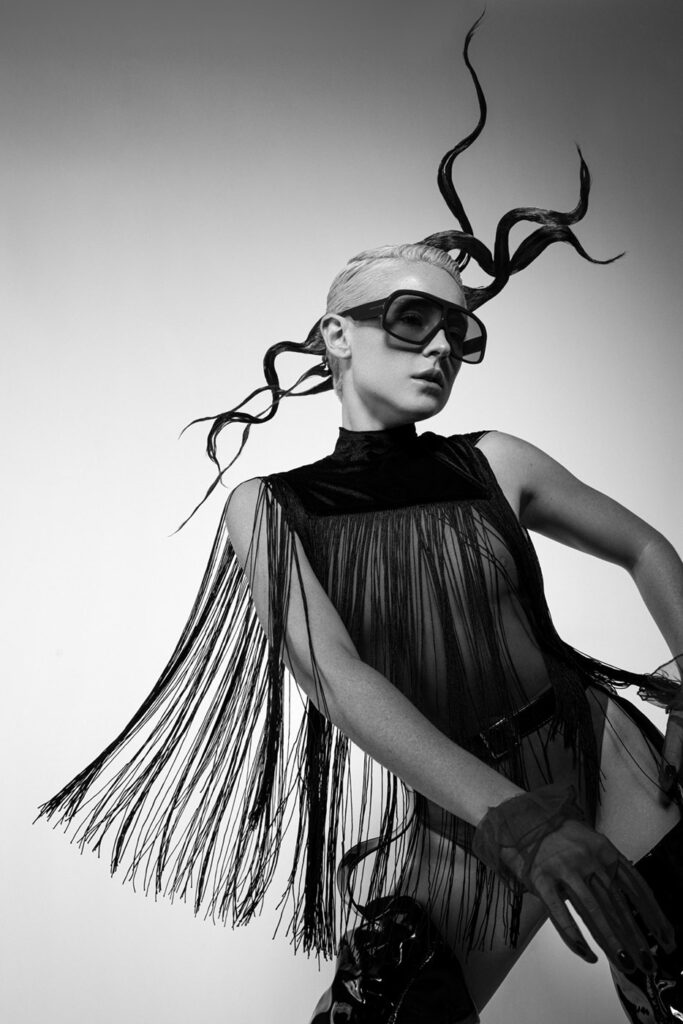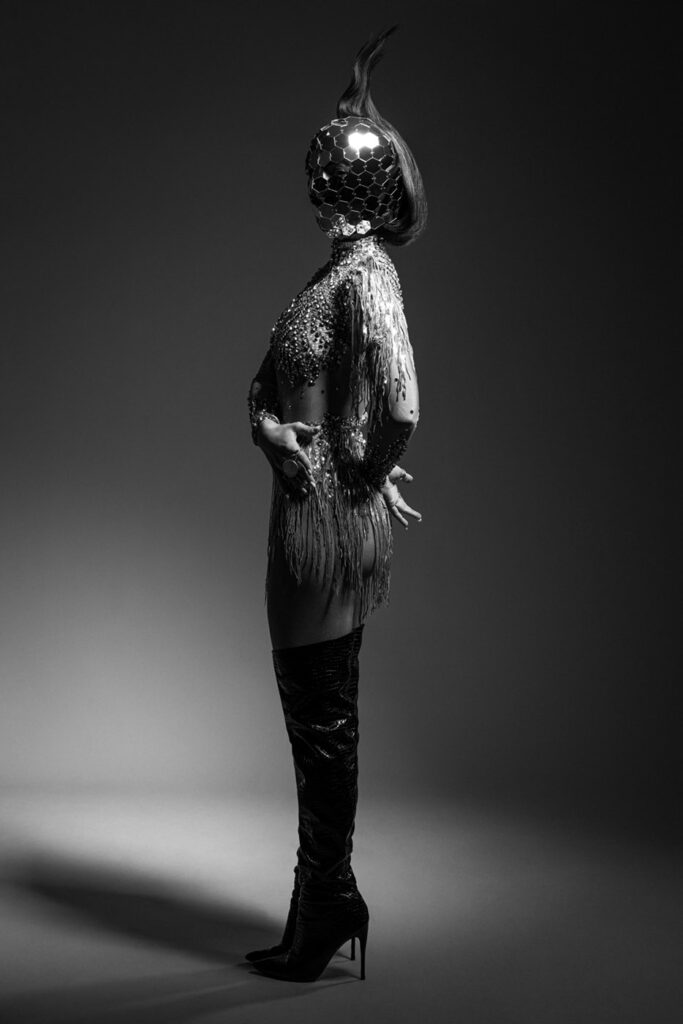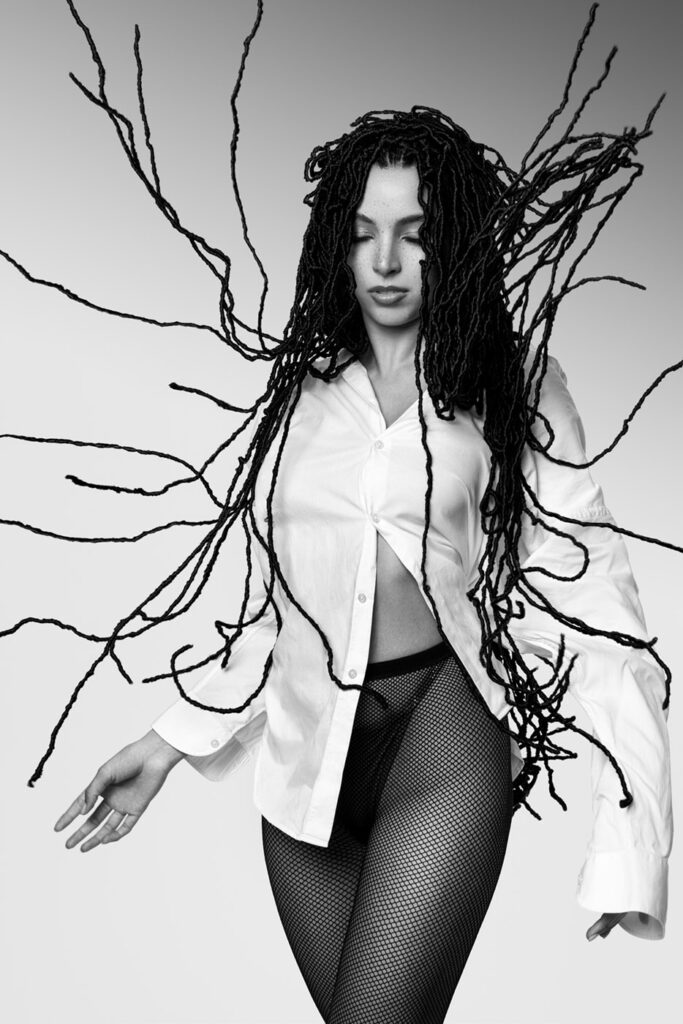
We are pleased to share a new black-and-white hair retouching project featuring imagery recognised as part of the 2026 Australian Hair Fashion Awards finalists.
This six-image series uses shape, contrast and texture rather than colour to create its visual identity. The monochrome treatment gives the collection a strong editorial quality and places even more attention on the structure of the hair.
Retouching Hair in Black and White
Black-and-white imagery can appear simpler than colour photography, but it often demands greater precision.
Without colour to separate different elements, tone becomes essential. Hair, skin, clothing and background all need enough distinction to remain clear. If the shadows become too heavy, important texture disappears. If the highlights become too bright, the hair can lose shape and depth.
Our retouching focused on preserving detail while strengthening the visual impact of each image.
We refined flyaway hairs, cleaned distractions and controlled tonal transitions throughout the series. We also paid close attention to the edges and silhouette of the styling, particularly in the more sculptural images.
Shape, Texture and Contrast
In colour hair photography, tone and hue often help define the styling. In monochrome work, the viewer reads the hair through light, texture and form.
That makes local contrast especially important.
Individual strands need definition, but the hair must still feel like one complete shape. Shine should reveal movement without becoming harsh. Dark areas need depth without turning into empty blocks.
The aim is not to make every strand equally visible. Good hair retouching guides the eye toward the details that support the creative idea.
Consistency Across the Collection
Each photograph in this series has its own composition, but the full set still needs to feel connected.
We balanced the contrast, skin finish and overall tonal character across all six images. This helped the collection maintain a consistent visual language without making every frame look identical.
Competition hair retouching often depends on this balance. Each image must work independently, while the complete collection needs rhythm and cohesion.
Specialist Retouching for Hair Awards
Black-and-white hair imagery leaves very little room for careless retouching. Rough transitions, uneven skin work and damaged hair texture can become more visible once colour disappears.
Our role is to polish the image without flattening its character. We refine the details while protecting the original styling, photography and creative direction.
This AHFA 2026 finalist collection is another example of the specialist hair retouching and competition post-production work handled by the studio. More award-focused projects from this year will be added to the portfolio and blog over the coming weeks.
For more examples of our recent hair retouching work, please visit our hair portfolio or blog. If you would like to get in touch to talk about your hair retouching project, please use our contact form.